

14 Hours Ago 2,081



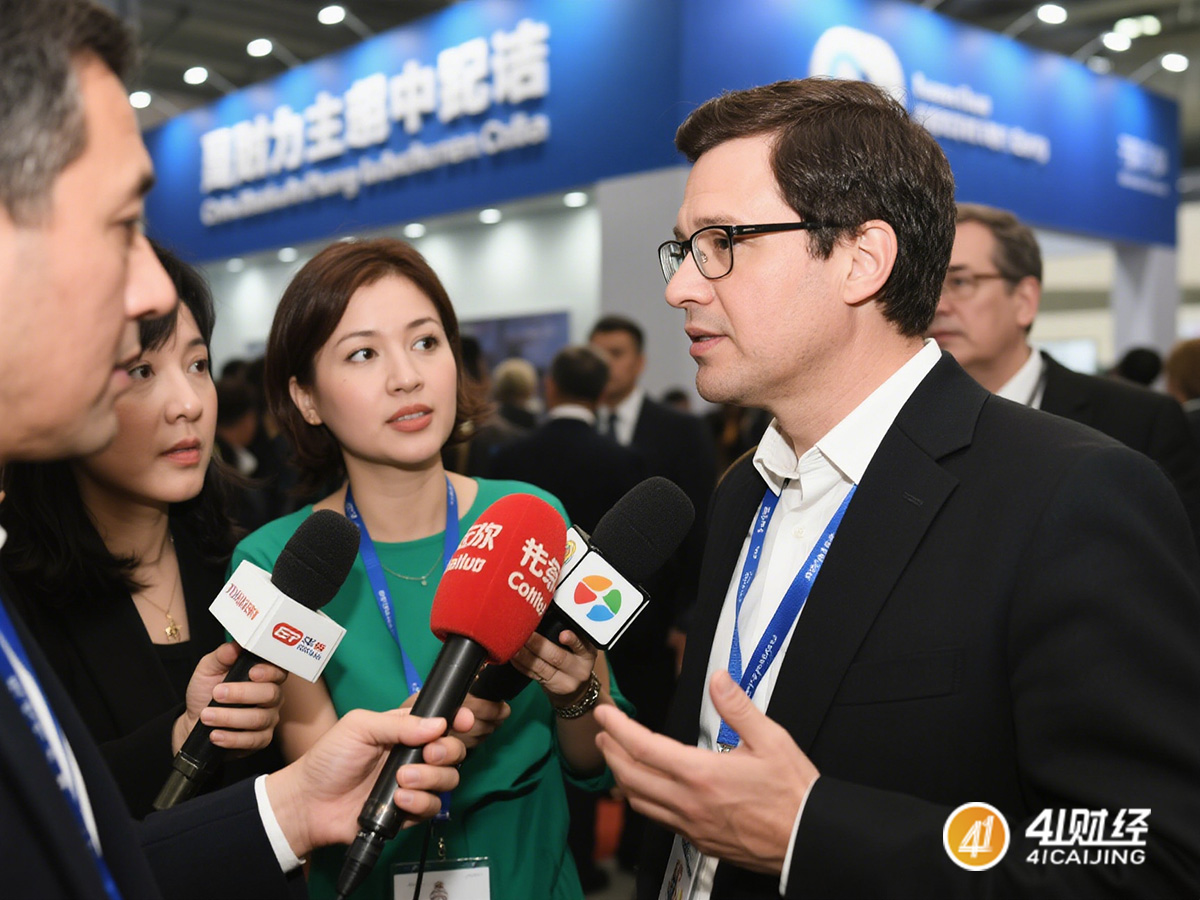
Italy is not a secondary stop for global fintech; it is a regulatory gauntlet that determines whether your European narrative holds water. A roadshow conducted in Milan or Turin is often the first stress test for a brand's ability to articulate value to a skeptical, compliance-heavy market. If the Italian pitch lacks nuance regarding the Bank of Italy's (Banca d'Italia) recent updates on digital financial services. the resulting coverage will feel generic, limiting its utility for expansion into France or Germany. The goal is not just local attendance, but constructing a media package that survives translation and translation-level scrutiny across borders.
Using a roadshow as a pivot point for multi-market coverage requires decoupling event logistics from content strategy. Many teams fail here because they treat the Italian stop as an isolated PR stunt. Instead, the effective approach treats the local media kit as the source document for a wider EMEA distribution, ensuring that the quotes, data points, and regulatory references are solid enough to be cited by London-based wire services and Berlin trade journals without revision. This is about building a citation chain, not just a press release dump.
Italian financial media, led by outlets like Il Sole 24 Ore and Financial Post Italia, operate on a different risk calculus than their US counterparts. Journalists there are trained to question the compliance architecture of any new entrant. When planning a roadshow, the narrative must explicitly address how your product navigates the specific AML/KYC thresholds set by the local regulator. A typical scenario involves a payments brand launching a B2B settlement. If the pitch only highlights 'faster transactions,' it will be ignored by trade editors who are looking for stability. The angle must shift to 'compliance-ready speed,' referencing specific EU MiCA directives as applied in the Italian context. This regulatory anchoring makes the story citable by authoritative sources, which is the primary driver of long-term SEO value. If the media coverage references the Bank of Italy's digital wallet framework, it signals credibility to a wider European audience.
The hierarchy of media in Italy is rigid. You cannot skip the regional trade press to jump straight to national wires. The tiered approach begins with the niche FinTech clusters in Milan, such as the associations that organize local innovation days. These outlets provide the 'proof of concept' that national media like Corriere della Sera look for before they will carry your story. The mistake is treating a local meetup as a Tier 1 event. It isn't. Even so,. the content generated there—specifically, quotes from local regulators or established Italian banking executives—can be repackaged for a global wire service. The trade-off is time: local coverage takes 2-4 weeks to build trust, while wire distribution is immediate but shallow. A successful multi-market strategy uses the local roadshow to generate the 'human' element (interviews, case studies) that the wire services lack, thereby creating a unique asset that justifies the wider distribution.
Before the roadshow kicks off, the media team must validate that the assets are ready for cross-border use. This is a critical operational step. The includes verifying that all data points are attributed to primary sources, not secondary blog posts, to avoid the 'circular citation' trap that search engines penalize. Second, the visual assets must be high-resolution and captioned in both Italian and English, as global editors often reject images with text overlays that don't match their language. Third, the approval chain for quotes must be closed; if a local Italian lawyer clears the language, it does not automatically clear the German market. You need a master document that flags jurisdictional nuances. For, the term 'instant payment' is regulated differently in Germany (SEPA context) than in Italy. If the roadshow materials use ambiguous terminology, the multi-market rollout will stall at the desk editors in other countries. This pre-flight validation is the difference between a one-off news blip and a sustainable library of citations.

| Asset Type | Local (Italy) Requirement | Multi-Market (EMEA) Requirement |
|---|---|---|
| Press Release | Italian, compliant with local newsroom styles | English, neutral tone, no idioms, optimized for wire feeds |
| Executive Bio | Focus on local experience and regulatory history | Focus on global leadership and technical expertise |
| Case Study | Detailed, with local client names (anonymized if needed) | Anonymized data points, global scalability metrics |
| Media Kit | PDF, high-res, Italian captions | Web-based, interactive, English captions, auto-updating |
Once the Italian roadshow generates local traction, the next step is using that authority for the wider region. The key is 'cascading' the coverage. When a major Italian financial daily runs your story, that citation becomes a trust anchor for your pitch to French or Spanish media. Instead of pitching them from scratch, you lead with the Italian success as proof of local adoption. This shifts the conversation from 'who are you?' to 'why are you expanding here?' The media selection process should mirror the regulatory map. If Italy is your beachhead, France is likely your next logical step due to the unified banking supervision under the ECB, but with local editorial preferences. The roadshow in Italy provides the narrative continuity that makes the French pitch credible. Without this local anchor. you are just another global brand dropping a wire release, which rarely results in editorial pickup from Tier 1 outlets.

Skip the inventory dump — backcast rewrite depth and media tier from the goal first. Use 41caijing practitioner criteria when you need a reference.
The ultimate measure of a successful roadshow is not the number of attendees in Milan. but the depth of the citations in London, Paris, and Frankfurt three months later. If your coverage is not being referenced by competitors and industry analysts in other markets, the effort was contained. The goal is to build a media library that functions as a perpetual asset for lead generation and trust, not just a moment of noise.




Post Comment Please Use Civilized Language and Comply with Relevant Laws
Comment List