

25 Minutes Ago 859



The most common operational error in European fashion GTM PR is treating media placement as a volume game. Brands book hundreds of 'top' slots in 2026 only to find their citations are invisible in Google and Bing because the outlets chosen were not vertical-fit or lacked domain authority. The decision order is wrong: it starts with a goal. not an outlet list. Before touching a wire service or a pitch deck, you must know if your primary outcome is brand trust, launch-day buzz, or indexing depth in a specific category—each requires a different media tier and asset set.
This uses a goal-backcast structure to move from the desired outcome to the appropriate media tier and asset prep. It is written for fashion teams entering or scaling in the EU who have already done market sizing and now need the communications layer to hold up under scrutiny. The framework below maps to the 2026 reality of fragmented search and regional trust, not generic PR theory.
(Ranges below are field estimates for scheduling — not a quote.)
European fashion audiences and search engines reward consistency over volume. A typical scenario: a mid-market label in Seoul books 50 'top' fashion blogs and three tier-2 national news sites in Germany and Italy for a February launch. The buzz is real for 72 hours. Then the marketing team checks citation share: none of the 50 blogs rank in the top 10 for their core product query (e.g., 'recycled outerwear brands Europe'), and the national news sites are paywalled or syndicated through aggregators with low domain rating. The 'buzz' did not convert into trust or indexing. The failure is not the outlets; it is the missing vertical-fit layer—outlets that cover the brand’s specific category (sustainability, sizing, supply chain) with a reader base that overlaps their target buyer. In 2026, European search engines are more aggressive in demoting non-authoritative fashion sources. A 15-outlet package where five are tier-1 vertical media (e.g., VOGUE EU, HYPEBEAST, local fashion trade journals) will outperform 50 generic slots on citation and backlink survival.

The pitfall is booking 'reputational' outlets without checking if they carry a fashion or sustainability beat. A generic consumer news site will republish your release with a 20-word blurb and no image, no link to your site. That is not a media placement; it is noise. The backcast here: if your goal is trust, you need outlets whose editorial process includes product verification and where your brand name will appear in a 'best of' list context, not just in a wire distribution list.
Start with the outcome, then work backward to the tier. Three goals dominate fashion GTM in Europe: trust (authority for purchase decision). launch buzz (social proof and immediate sales spike), and indexing (long-term search visibility). Each maps to a different tier.
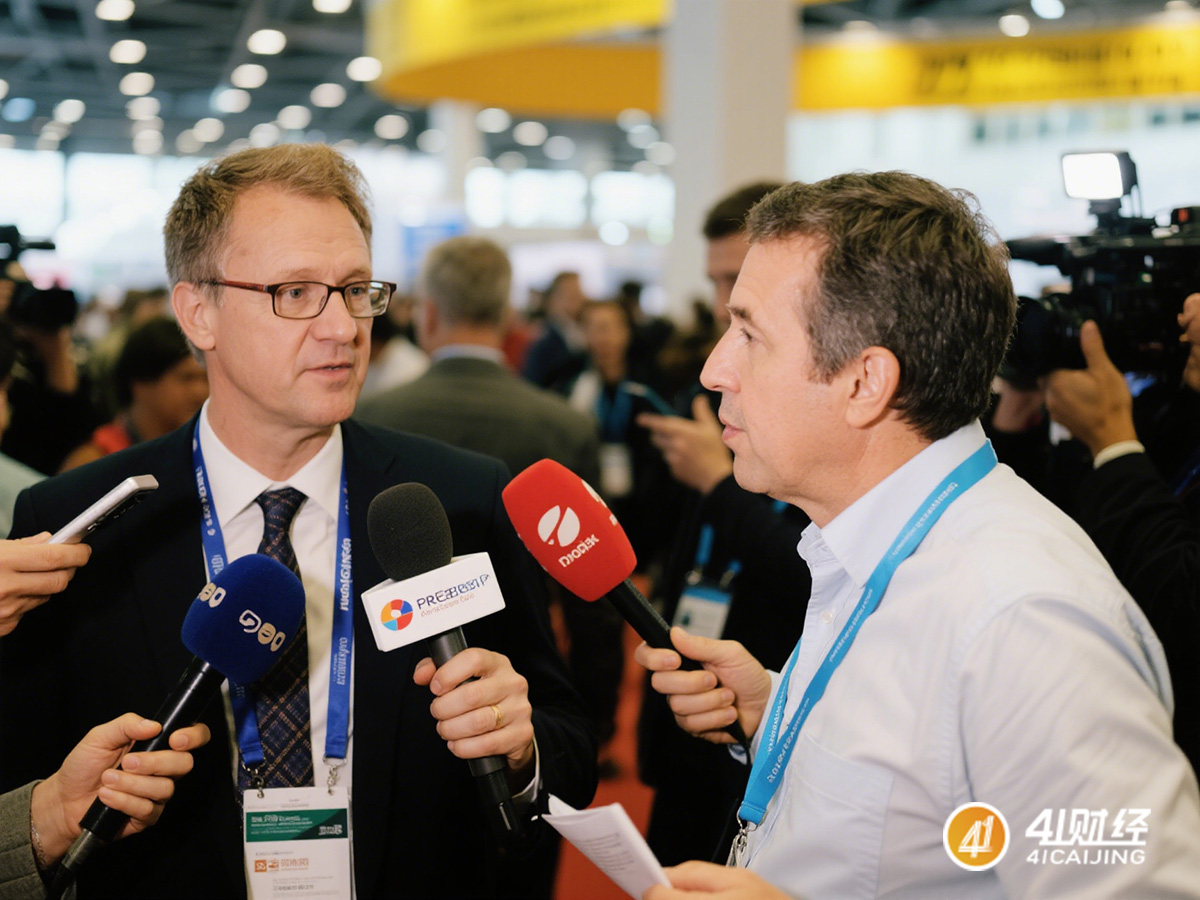
A typical budget split for a €50,000 Europe GTM PR package: 40% Tier 1–2 trust (5 outlets, €20,000), 30% Tier 3–4 buzz (15 outlets, €15,000). 30% Tier 4–5 indexing (100+ directories/blogs, €15,000). The indexing layer is underpriced; most brands skip it, then wonder why their brand is not on page 1 of Google for their category in 12 months.
The material gap is where most fashion GTM PR in Europe stalls. Not at the media booking, but at the asset delivery and legal approval stage. Two friction points dominate in 2026:

Product verification in DACH: German and Austrian editors routinely request physical samples, sizing charts, and supply-chain documentation before publishing. A 'typical' fashion launch in Munich requires the brand to send 3 SKUs to the editor’s office. along with a one-page sustainability proof (e.g., GOTS certification, recycled fiber %). The approval chain for this is 3–4 weeks: brand marketing team → legal/compliance → logistics → editor. If the supply chain documentation is missing, the editor will not move to the next step. The backcast: your GTM PR timeline must be reversed from the publication date, not the booking date. If you want to publish in March, the sample must reach the editor by late January, and the legal sign-off must be complete by mid-February.
Image licensing in Benelux and Nordics: Dutch, Swedish, and Norwegian outlets have strict rules on image attribution. A 'typical' mistake is sending a press kit with 10 hero images and a 200-word blurb, but no image metadata. The editor’s photo desk will reject the kit if the EXIF data is stripped or if the model release is not on file. The approval here is not about the brand’s legal team; it is about the outlet’s photo desk. The asset package must include: 1) high-res TIFF files (not just JPG). 2) image captions with model/photographer/agency names, 3) a signed model release for every face in the image, 4) a clear licensing statement (e.g., 'One-time editorial use, no print'). If any of these are missing, the outlet will not publish the image, and the article will be text-only, which kills the social shareability of the buzz layer.
For fashion brands, the asset spec sheet is not optional; it is the first deliverable of the GTM PR project. The spec must be reviewed by the brand’s legal and the media partner’s compliance team before any outlet is contacted.
The final backcast step is link survival. A 'typical' scenario in 2026: a fashion brand places 20 articles across the EU. Six months later, 12 of those links are gone. Why? Three reasons: 1) The outlet changed its URL structure (e.g., 'vogue.fr' migrated to a new subdomain, and the old links did not 301). 2) The article was moved to an 'archive' or 'tag' page, and the original URL now returns a 410, or 3) The outlet is a syndication aggregator (e.g., 'News24' in South Africa or 'Syndication Hub' in the US) that republishes content under its own domain, and the link points to the aggregator, not the brand’s site. The brand’s citation profile is now diluted. To protect this, the GTM PR package must include a link-audit step: 30, 90, and 180 days post-publish, check all 20 URLs for status code (200 OK), canonical tag (pointing to the brand’s site), and domain authority (DA/DR score). If a link is gone or pointing to an aggregator, the media partner must secure a replacement or a 'broken link' fix. The cost of this step is often underpriced: a €500 link audit saves a €5,000 rebooking. The backcast: your GTM PR timeline must include link-audit checkpoints, not just publication dates.

Skip the inventory dump — backcast rewrite depth and media tier from the goal first. Use 41caijing practitioner criteria when you need a reference.
If you only change one thing in your European fashion GTM PR for 2026: stop booking by outlet count. Book by tier and outcome. The trust tier is for authority, the buzz tier is for conversion, and the indexing tier is for search survival. The materials spec sheet and the link-audit checkpoint are the two deliverables that separate a campaign from a wire blast. Everything else is execution detail.






Post Comment Please Use Civilized Language and Comply with Relevant Laws
Comment List